Sep 11, 2025
2 min read
AWS S3 vs Cloudflare R2: Budget & Performance Comparison
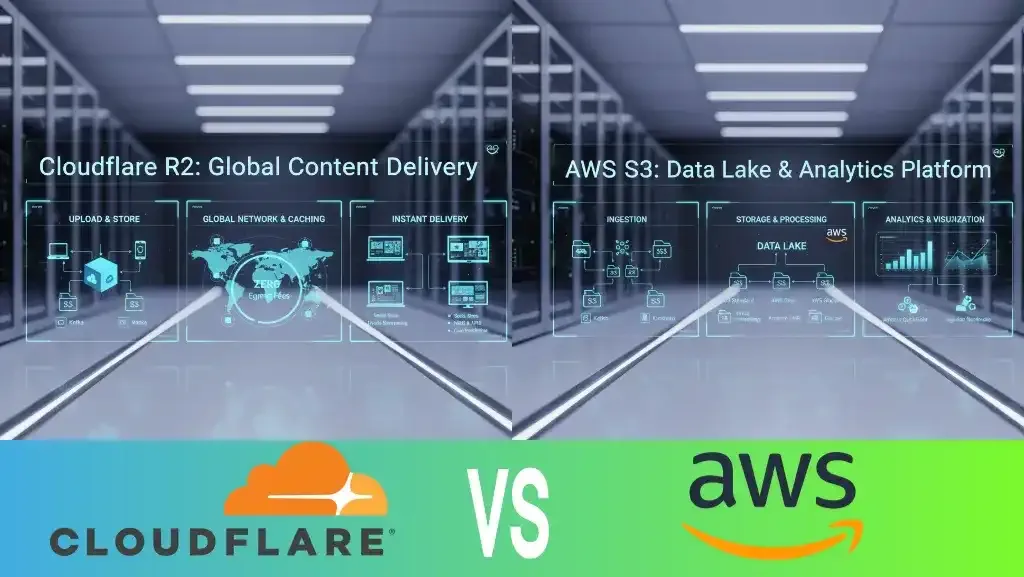
Understanding the Core Offerings
- Amazon S3: Scalable, durable, secure object storage with multiple storage classes. Deeply integrated with AWS ecosystem.
- Cloudflare R2: S3-compatible storage with zero egress fees. Uses Cloudflare’s global network for fast access and predictable pricing.
Performance: Speed & Latency
AWS S3
- Pros: Fast within AWS, multiple regions for low latency, highly scalable.
- Cons: Global latency can vary; performance depends on proximity to S3 region.
Cloudflare R2
- Pros: Low latency for global users, fast content delivery via Cloudflare’s edge network.
- Cons: Still maturing; raw throughput may vary for non-CDN scenarios.
Verdict: For global audiences, Cloudflare R2 often delivers lower latency. AWS S3 excels within AWS, especially with CloudFront CDN.
Budget: Cost Comparison
AWS S3
- Storage: Varies by class; generally competitive.
- Requests: Small per-request charges.
- Egress: Major cost driver; can be expensive for high-traffic or large files.
- Pros: Flexible storage options, good for long-term archiving.
- Cons: Egress fees can be unpredictable and high.
Cloudflare R2
- Storage: Competitive per-GB pricing.
- Requests: Small per-request charges.
- Egress: Zero fees, huge cost advantage for public-facing data.
- Pros: Predictable costs, ideal for high-egress use cases.
- Cons: For very low-egress apps, S3 deep archive may be cheaper.
Budget Verdict: Cloudflare R2 is better for apps with high internet data transfer. S3 is still cost-effective for minimal egress or internal AWS use.
Use Cases
AWS S3
- Core storage for AWS apps (EC2, Lambda, EKS)
- Data lakes & analytics
- Backup & disaster recovery
- Long-term archiving with Glacier
- Complex data management
Cloudflare R2
- Static asset delivery (websites, images, CSS/JS)
- Video/audio streaming globally
- User-generated content storage
- APIs with large payloads for distributed clients
- Multi-cloud S3-compatible storage layer
Final Decision
- Choose Cloudflare R2: For global content delivery, cost predictability, and zero egress fees.
- Choose AWS S3: For AWS-native apps, complex analytics, archiving, or minimal egress scenarios.
- Hybrid approach: S3 for internal AWS storage, R2 for public-facing assets.